TB-500 5 mg
TB-500 is a synthetic fragment of the naturally-occurring thymosin beta-4 protein — specifically, the active 17-amino-acid region that contains the actin-binding sequence. Researchers use TB-500 to study cell migration, actin-cytoskeleton dynamics, and tissue-recovery mechanisms downstream of the thymosin family.
What TB-500 actually is
Thymosin beta-4 (Tβ4) is a 43-amino-acid protein expressed in nearly every tissue type. Its primary biological function is sequestering G-actin monomers, which regulates the assembly and disassembly of the actin cytoskeleton. TB-500 — the synthetic research compound — corresponds to amino acids 17-23 of Tβ4 (the LKKTETQ active region) extended to a 17-residue fragment. The shorter fragment is more practical for research handling than the full-length protein and retains the actin-binding activity.
What the research literature covers
Published research on TB-500 and its parent Tβ4 spans cell migration (endothelial and epithelial cell wound-closure models), angiogenesis (new blood-vessel formation in injury contexts), cardiac tissue (early-stage research on post-ischaemic recovery in rodent models), and dermal wound healing. As with BPC-157, most published evidence is preclinical — direct human trials remain limited and clinical extrapolations should be made carefully.
BPC-157 vs TB-500 — which to study
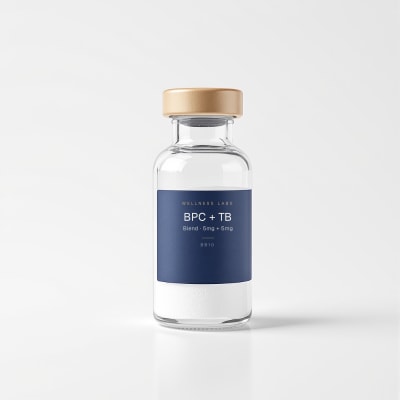
These are different molecules acting through different pathways. BPC-157 is associated with growth-factor expression, angiogenesis, and nitric-oxide signalling. TB-500 acts primarily through actin-sequestration and cell-migration mechanisms. Researchers studying single-mechanism questions choose one; researchers studying composite tissue-recovery questions sometimes pair them (the BPC + TB-500 blend is the most common pairing in the grey-research community).
Quality verification at Wellness Labs
Same framework as the broader catalogue: upstream ICH Q7 GMP manufacturing, independent HPLC analysis at a US-based third-party laboratory, ≥98% peak-area purity at λ=214 nm against USP-NF, Ph. Eur., or JP reference standards. Certificate of Analysis available per batch through the research account. Lyophilised powder format; storage and handling guidance accompanies every shipment.
In the tb-500 range

Common questions
- Is TB-500 legal in the UAE?
- TB-500 is classified as a research compound in the UAE and is sold through standard wellness-supply channels. Customers purchase for self-directed research use; Wellness Labs operates under standard UAE commercial trading rules with VAT-compliant invoicing on every dispatch.
- How is TB-500 typically dosed in research protocols?
- Published animal research has used a wide range; the most-cited research-protocol reference in the grey-research community is approximately 2-2.5 mg twice weekly for 4-6 weeks, followed by a longer maintenance phase at lower frequency. No consensus optimal human protocol has been established in peer-reviewed literature; researchers calibrate to their own protocol design.
- What is the actin-sequestration mechanism?
- Actin exists in two forms: monomeric G-actin (free) and filamentous F-actin (polymerised). TB-500's active region binds G-actin, holding it in the monomeric pool and regulating the rate at which it polymerises into F-actin. This regulation is central to how cells reshape their cytoskeleton during migration, division, and tissue remodelling. By modulating the G-actin pool, TB-500 indirectly influences cell migration speed and direction in published research models.
- What is the half-life of TB-500?
- Published pharmacokinetic data is limited. The parent Tβ4 has an apparent plasma half-life on the order of hours, but tissue half-life appears substantially longer because of the binding kinetics with cellular actin pools. Researchers using TB-500 typically dose 1-2× weekly rather than daily, reflecting this longer effective duration.
- How is TB-500 quality-verified?
- Every released batch carries independent HPLC verification at a US-based third-party laboratory. Method: HPLC with UV detection at λ=214 nm. Acceptance criterion: ≥98% peak-area purity against pharmacopoeia reference standards. Certificates available through the research account on request.
- How do I store TB-500?
- Lyophilised TB-500 is ambient-temperature stable in transit. Long-term storage of unreconstituted vials is recommended at -20 °C protected from light. Post-preparation storage and handling protocols are included with each shipment.
- How fast is delivery in the UAE?
- Same-day delivery within Dubai, next-business-day across the UAE. GCC delivery (Saudi Arabia, Kuwait, Bahrain, Oman, Qatar) in 3-5 business days. Cold-chain handling is applied where the protocol requires it.
- Can Nour help me decide between TB-500 alone and the blend?
- Yes. Nour walks through the difference between TB-500 alone and the BPC + TB-500 combined research blend, what the literature shows for single-mechanism vs paired-mechanism studies, and which fits your research question. Tap "Talk to Nour" anywhere on this page.
Related categories
Not sure which is right for you?
Nour reads peer-reviewed studies and walks you through what each compound is best suited for. English or Arabic, inside the chat.