A longevity stack worth the cabinet space
Most "longevity stacks" sold to consumers are a stack of marketing claims. The research version is narrower and more honest — three compounds, three independent mechanisms, one shared goal: keep the systems that decline with age running closer to their younger baseline.
Pillar one — cellular energy (NAD+)
Mitochondria use NAD+ to convert nutrients into ATP. NAD+ tissue levels fall by roughly half between early adulthood and the seventh decade. Restoring intracellular NAD+ is the most-studied longevity intervention with reproducible human data. The Wellness Labs catalogue covers direct NAD+ solution for fast repletion and pairs it with NMN/NR precursor information for sustained daily research.
Pillar two — the pineal axis (Epithalon)
Epithalon is a synthetic four-amino-acid Khavinson bioregulator that targets the pineal gland — the body's master timekeeping organ. Khavinson's research group in St. Petersburg published a 12-year human cohort suggesting that periodic Epithalon supplementation was associated with reduced age-related mortality compared to controls; the study has methodological caveats but is the longest cohort in synthetic-bioregulator research. Researchers pair Epithalon with NAD+ to address two pillars at once: cellular energy and chronobiological signalling.
Pillar three — immune resilience (Thymalin)
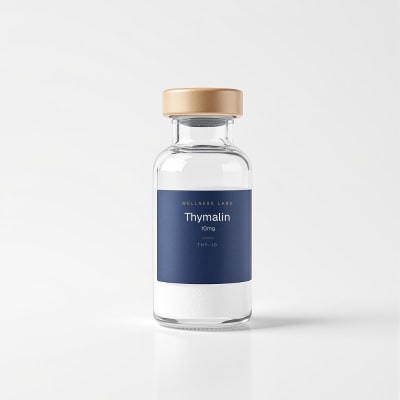
The thymus is the gland that trains naive T-cells. It involutes (shrinks) with age, and immune competence falls in lockstep. Thymalin is a peptide extract derived from thymic tissue that has been studied in Russian and Eastern European literature as a thymic-axis bioregulator. Researchers exploring immune-system longevity often add Thymalin to the NAD+/Epithalon base to address the third pillar — the gradual loss of adaptive immune flexibility.
How researchers actually structure the protocol
A typical Khavinson-school research protocol runs a 20-day pulse of Epithalon and Thymalin twice yearly (March-April and September-October), against a daily NAD+ baseline. The pulse-and-rest design echoes how endogenous bioregulator pathways operate — not constant supplementation but discrete signalling windows. Nour can walk through the timing, the sequencing, and what each pillar contributes to your research question during a consultation.
In the longevity stack range


Common questions
- Is a three-compound longevity stack overkill?
- It depends on your research question. If you are studying a single mechanism, one compound is enough. If you are studying systemic age-related decline — energy, repair signalling, and immune competence at once — the three-pillar stack matches the question. Nour helps frame which approach fits your protocol.
- Can I rotate the compounds instead of stacking them?
- Yes. The Khavinson-school standard is a daily NAD+ baseline with twice-yearly pulses of Epithalon (spring) and Thymalin (autumn). This sequencing reflects the way endogenous bioregulator signals appear to operate — discrete windows rather than constant tone. Researchers studying mechanism isolation often prefer single-compound cycles.
- Do these compounds interact with each other?
- No known pharmacological interactions are published between NAD+ direct solution, Epithalon, and Thymalin at research-typical doses. They act through largely independent pathways: NAD+ via sirtuin/PARP signalling, Epithalon via pineal-axis transcription, Thymalin via thymic differentiation factors. Researchers who pair them report no compounded tolerability issues in available literature.
- How quickly does this stack show measurable effects?
- In published research, intracellular NAD+ elevation occurs within hours; sirtuin-mediated downstream changes accumulate over 4-12 weeks of sustained supplementation. Epithalon protocols are pulsed twice yearly and measured over 6-24 month windows. Thymalin protocols similarly run on quarterly to biannual timescales. The stack is a slow-and-steady research input, not an acute intervention.
- Is this stack legal in the UAE?
- All three compounds are classified as dietary research compounds and are sold through standard UAE wellness-supply channels. Wellness Labs operates under UAE commercial trading rules with VAT compliance applied to every dispatch.
- How does this compare to Charava NMN + resveratrol?
- Charava's line targets one axis — sirtuin activation through NMN + plant-derived activators. The Wellness Labs longevity stack adds two further pillars (pineal-axis and immune-resilience) and substitutes direct NAD+ for the precursor approach. They are complementary rather than mutually exclusive — some researchers stack both ranges.
- How fast is delivery in the UAE?
- Same-day in Dubai, next-business-day across the UAE. GCC delivery in 3-5 business days. Cold-chain handling is applied where the protocol requires it.
Related categories
Not sure which is right for you?
Nour reads peer-reviewed studies and walks you through what each compound is best suited for. English or Arabic, inside the chat.